
Climate scientist Tapio Schneider advocates for expanding early warning systems beyond rainfall events to include other disaster triggers like flash floods, citing the recent Nepal floods. He highlights the inevitability of 1.5 degrees Celsius global warming and discusses the role of advanced climate modelling and AI in improving predictions and research, particularly for regions like India.

The Ministry of Corporate Affairs (MCA) has decided to put the early-warning system on the backburner due to technical snags.

The system will be able to provide information beforehand on the speed of the tsunami when it hits the coast and the regions that will be harmed the most [by the waves], Kapi Sibal said.

Coming against the backdrop of rising incidence of financial frauds, the proposed prediction model would bolster SFIO's capabilities in detecting misdoings at the initial stage itself.
Favouring a 'new Bretton Woods Agreement', International Monetary Fund chief Dominque Strauss-Kahn has said an early warning system to detect impending dangers to the world economy must be put together by international financial expertise.

Delhi's air quality slightly deteriorated on Wednesday, moving into the 'poor' category with an AQI of 232, and is forecast to worsen to 'very poor' by Friday due to unfavourable meteorological conditions. PM2.5 remains the dominant pollutant, with vehicular emissions and biomass burning identified as major contributors. The city also experienced its coldest morning of the season.
Testing of the system can only be done when another large quake strikes.

New Delhi experienced its worst air quality in 287 days on Tuesday, with the Air Quality Index (AQI) reaching 350 and several monitoring stations reporting 'severe' pollution levels. PM2.5 was identified as the dominant pollutant, posing significant health risks. The city has been placed under Stage II of the Graded Response Action Plan, with stubble burning and transport emissions being major contributors to the deteriorating air quality.

Researchers have outlined five crucial actions to help the world prepare for a potentially strongest-on-record El Nino, aiming to reduce its severe health consequences like infectious diseases, malnutrition, and heat-related conditions. These recommendations, published in The Lancet, emphasise a comprehensive risk overview and early preparatory measures.

Uttarakhand Chief Minister Pushkar Singh Dhami has directed officials to strengthen regular monitoring and safety measures for 13 identified 'sensitive' glacial lakes in the state, citing potential risks in hilly regions.

Researchers at IIT Mandi have developed a real-time landslide monitoring and early warning system that has been deployed in landslide-prone areas of Mandi district, Himachal Pradesh. The system uses machine learning and sensors to detect ground movements and provide early warnings to authorities and the public.
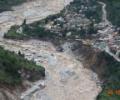
The Kathmandu-based International Centre of Integrated Mountain Development has launched a project to set up a hi-tech flood early warning system in the flood prone districts of Eastern Assam's Dhemaji and Lakhimpur.

India's cybersecurity agency, CERT-In, has issued a critical advisory warning about autonomous AI agents accessing sensitive data of Indian organisations without authorisation. Government sources on Friday emphasised the need for companies to bolster cybersecurity measures and monitor system activity, noting that while no major compromise occurred, the incident serves as an early warning. Future AI regulation is expected to address the risks posed by these agents.

Prime Minister Narendra Modi addressed the ASEAN-India summit, advocating for a free, inclusive, and rules-based Indo-Pacific based on cooperation. He proposed nine initiatives, including a long-term maritime plan, free e-visas, and cooperation in civil nuclear energy, emphasizing India's commitment to ASEAN's unity and centrality amidst global uncertainties.
The Centre for Airborne Systems, DRDO's Bangalore-based unit, has revived the airborne early warning system programme, which was scrapped in 1999 following a crash of the rotodome radar-fitted Avro aircraft near Arakkonam in Chennai.
The system is likely to be inaugurated by Earth Sciences Minister Kapil Sibal on October 15.

'When a glacier collapse or a major flood event does occur, the water will simply reclaim its original path, and anything built in that path will be swept away.'
A Tsunami early warning system covering six 'at-risk' Andaman coast provinces was completed by Thailand.

The government has set up an early warning system to detect Satyam-like corporate frauds on a pilot basis by keeping the accounts and activities of 50 identified companies under the scanner.

Doctors have advised Delhi residents to take precautions like wearing N95 masks, avoiding outdoor walks, shifting exercise indoors, and installing air purifiers at home due to high pollution levels. Vulnerable groups, including children and the elderly, are particularly cautioned. Experts explain the seasonal rise in pollution and the impact of various factors on air quality.
The system's early warnings will come after a quake rupture has already begun but before the shaking is felt tens of miles from the epicentre.
Warning that the risk of another tsunami hitting is real, a top United Nations official has called on the Indian Ocean countries to "really" commit themselves to setting up an early warning system within the next 14 months.

Following devastating flash floods in Nepal, experts are calling for systematic scientific assessments of glaciers to understand and mitigate hazards, alongside the development of a robust land use policy for the Himalayan region. The floods, which killed over 460 people and left thousands missing, are believed to be linked to climate change impacts on glaciers and permafrost.

Experts from the International Centre for Integrated Mountain Development (ICIMOD) suggest that an ice-rock avalanche originating in a high-altitude area likely triggered the devastating flash floods that swept across central Nepal districts, killing at least 95 people and leaving nearly 500 missing.

The Haldwani forest division has launched India's first AI-based forest acoustic surveillance system. This innovative technology uses AI, acoustic sensors, and long-range wireless communication to detect illegal logging, poaching, and other suspicious activities in real-time, even in remote areas. Powered by solar energy, the system provides continuous monitoring, significantly enhancing forest protection, wildlife conservation, and biodiversity monitoring efforts.

Prime Minister Narendra Modi cautioned against the 'weaponisation' of technology and critical minerals at the BRICS summit, advocating for cooperation to foster shared prosperity. Concurrently, Chinese President Xi Jinping announced plans for an open-source AI ecosystem for BRICS nations, positioning Beijing as a key technology partner amid global AI competition.

Researchers at IIT Bombay have discovered that heatwaves in the Indo-Gangetic Plains are primarily caused by local land and weather conditions, rather than hot air originating from elsewhere, emphasising the need for location-specific early warning systems.

Chinese President Xi Jinping has ordered extensive rescue operations following devastating flash floods and mudslides near the China-Nepal border in Tibet. The disaster has caused heavy casualties, left nearly 400 people missing, including 105 Indians and 37 NRIs, and damaged infrastructure. Emergency teams have been deployed, and efforts are underway to evacuate residents and provide medical aid.

The TEWS was envisioned as a national importance e-governance project by the Union Ministry of Earth Sciences after the 2004 tsunami disaster.

Delhi experienced its most polluted Diwali in five years with an average Air Quality Index (AQI) of 376, and the day after the festival saw only a marginal improvement, remaining in the 'very poor' category at 371, accompanied by a thick blanket of smog and fog.

The death toll from devastating flash floods in Nepal has surged to 1,050, with nearly 4,000 people, including foreigners and security personnel, still missing. Rescuers are struggling with intermittent rainfall, rising river levels, and difficult terrain, while expert teams from India and China assist in operations, particularly at hydropower project sites where many workers are believed to be trapped in tunnels.

A new study projects that by the end of the century, hot days could experience an additional four hours of extreme heat, with low and middle-income countries being disproportionately affected. The research highlights that traditional daily temperature metrics often overlook shorter, intense periods of heat, and hourly assessments are crucial for effective heat risk management and public health planning in a warming climate.

Reserve Bank of India (RBI) Deputy Governor Rohit Jain has warned that financial institutions' increasing reliance on a small number of common technology providers, including cloud and AI model providers, could create a new source of systemic risk. He highlighted 'speed, concentration and opacity' as key risks, noting that a disruption at one provider could rapidly spread across multiple institutions, amplifying existing financial risks.

A new study reveals that approximately 70 per cent of the year-to-year variation in winter air pollution across northern India can be explained by the frequency of western disturbances. These storm systems, originating from the Mediterranean, help clear pollution through precipitation and ventilation. The findings suggest that predicting the frequency of these disturbances could provide advance warning of severe pollution, allowing for better preparedness and implementation of control measures.
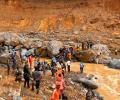
Union Home Minister Amit Shah on Wednesday said the Centre had sent multiple advance warnings to the Kerala government about possible floods and landslides in the state, starting as early as July 23, and nine National Disaster Response Force (NDRF) teams were rushed to the state the same day.
India will alert its neighbouring countries about possible tsunami hits using its newly-launched tsunami early warning system. "We will alert our neighbouring countries, including Pakistan, of possible tsunami strikes in the event of massive earthquakes," Union Earth Sciences Minister Kapil Sibal said in New Delhi on Wednesday. However, Sibal said that it would be up to the governments of the respective countries to issue alerts and order evacuations in such a scenario.
'The close collaboration between Pakistan and China, and the assistance Pakistan receives, is a factor in our planning, and the IAF is building its capacity to counter precisely such collusive threats.'

The objective should be clear: Energy security without abandoning environmental responsibility; water security without ignoring local concerns; and strategic resilience without sacrificing public confidence, notes Varun Arya.

Cyclone Arnab made landfall on the Andhra coast early on Wednesday, causing widespread destruction, including uprooted trees, damaged infrastructure, and inundated low-lying areas. Five people were killed in related incidents, primarily due to electrocution and wall collapse. Chief Minister N Chandrababu Naidu has sought central assistance and outlined relief measures for affected residents and farmers.

'The valley is around 16 km from the Nepal border, and it took just 8-10 minutes for the ice and rocks to reach the Nepal border. You can imagine how fast it must have travelled!'
